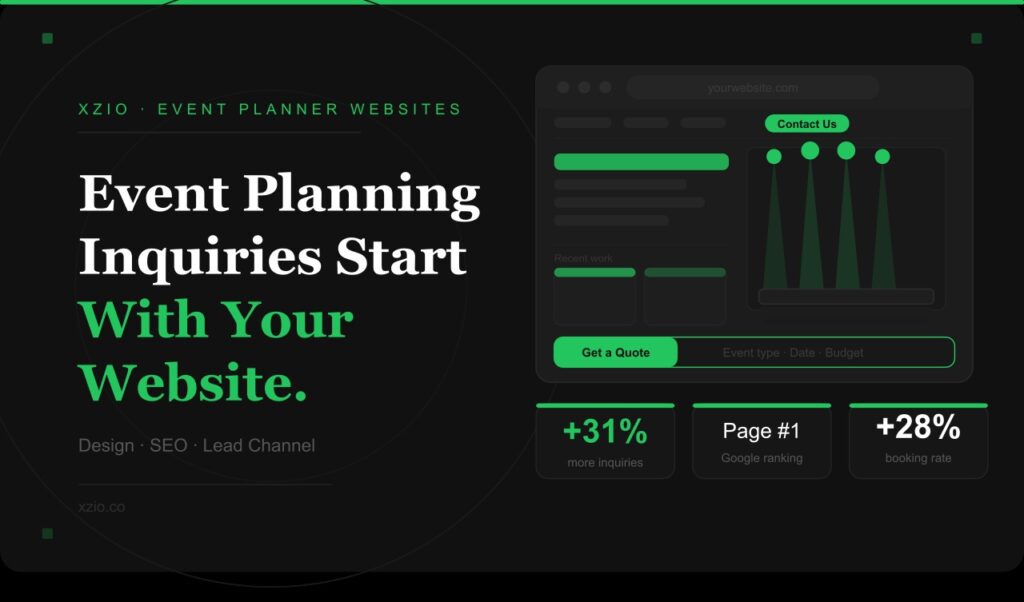
If you are an event planner and your website is not bringing inquiries, you are not alone.
Many planners invest in a website expecting it to bring clients, but over time they see very little response. In most cases, the issue is not the service itself. It is how the website presents that service and how visitors move from interest to inquiry.
When someone lands on your website, they are trying to decide whether you are the right fit. They look at your work, your experience, and how easy it is to contact you.
If your website does not support this decision, people leave and choose another planner.
In this guide, we explain where most websites fall short and what you can improve to get better inquiries.
Why Most Event Planning Websites Fail to Generate Leads
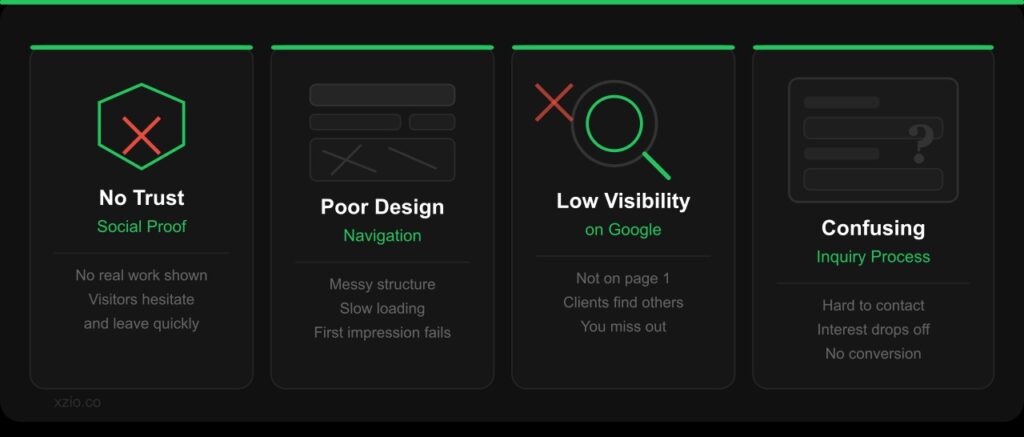
Before improving your website, it is important to understand what is not working. Most event planning websites face similar issues that limit inquiries.
Lack of Trust and Social Proof
Event planning is based on trust. Clients want to see what you have done before they reach out.
When your website does not show real work, visitors hesitate.
For example, when someone compares two planners, the difference often looks like this:
- One website lists services such as wedding or corporate events but shows no actual setups
- Another website shows full event visuals with décor, layout, and short context about the event
Most people feel more confident choosing the second option because they can understand the work.
Adding client feedback along with your projects strengthens this further.
Poor Website Design and Navigation
A website should guide visitors, not make them search.
If users cannot quickly understand your services or find important sections like your portfolio or contact form, they are likely to leave. First impressions matter, and a messy or slow website can reduce trust.
Your website should be smooth to navigate and well structured. Visitors should be able to find what they need within a few clicks.
Low Visibility on Google (SEO Issues)
A website cannot bring inquiries if it is not visible where people are searching.
Many event planners depend on referrals or social media. These channels can bring work, but they do not give you control over how often new inquiries come in.
When someone searches for an event planner, they usually have a clear requirement and are ready to move forward. If your website does not appear in those results, that opportunity goes to someone else.
For example:
- A user searches for “wedding planner in New York” and contacts one of the top options they find
- A company searches for “corporate event planner near me” and reaches out to a business that appears on the first page
If your website is not part of these results, you are not part of the decision.
Improving search visibility helps your website get discovered by people who are already looking for your services.
Inquiry and Booking Process Is Confusing
Interest does not always turn into action.
If visitors are unsure how to contact you, they leave.
For example:
- A user likes your work but cannot find a contact button
- The contact page is hidden inside the menu
- The form asks for too much information
In many cases, the user exits instead of completing the inquiry.
Visible and well-placed contact options improve response.
The Importance of a Website That Generates Leads
A well structured website can support your business growth over time.
Instead of only showing information, it should guide visitors step by step from discovering your work to contacting you.
Portfolio and Project Showcase to Build Credibility
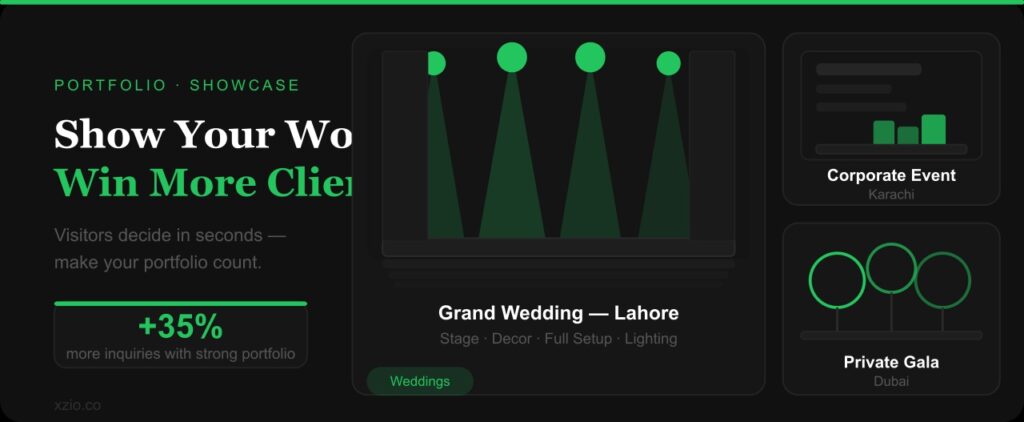
Your portfolio is often the first place where visitors decide whether they should continue exploring your website or leave.
It is not just about showing images. It is about helping visitors understand the type of events you handle and how you approach them.
When a visitor lands on your portfolio, they are trying to answer one question:
Can this planner handle my event?
A strong portfolio answers that without needing long explanations.
Instead of uploading random images, it helps to present each event with some context.
For example:
- A wedding project can show the full setup including stage design, guest seating, lighting, and overall theme
- A corporate event can include branding elements, stage arrangement, and how the event was structured
- A private event can highlight decor choices, space usage, and guest experience
Adding short descriptions alongside visuals makes a big difference. It helps visitors connect your work with their own requirements.
You can also organize your portfolio in a way that makes browsing easier. For example:
- Separate sections for weddings, corporate events, and private events
- Highlighted projects for your best work
- Featured events on the homepage to create a strong first impression
When visitors can clearly see your work and understand it, they spend more time on your website and are more likely to move forward.
Client Testimonials and Case Studies
Client feedback plays an important role in how visitors decide whether to contact you.
When someone visits your website, they are not only looking at your work. They are also trying to understand how you handle events, communicate with clients, and manage challenges.
This is where testimonials and case studies help.
Instead of adding short general lines, it is better to present feedback with some context. This gives visitors a clearer picture of your work.
For example:
- A wedding client shares how you handled last-minute changes in décor and timing without affecting the event flow
- A corporate client explains how you managed multiple vendors and kept everything on schedule
- A private event client mentions how you understood their requirements and delivered according to their expectations
This type of feedback shows more than satisfaction. It shows how you work.
Case studies take this further by explaining:
- What the client needed
- What challenges were involved
- How you approached the event
- What the final outcome looked like
When visitors see this level of detail, they feel more confident in reaching out.
Online Booking and Inquiry Integration
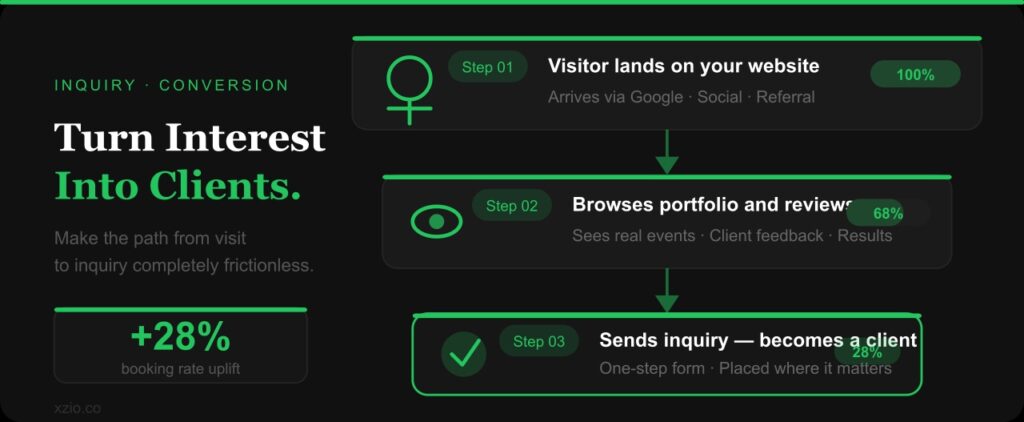
Once a visitor is interested in your work, the next step should feel natural.
Many websites lose inquiries at this stage because the path to contact is not placed where users expect it. Instead of guiding visitors, they are left to search for what to do next.
A better approach is to make inquiry options part of the overall experience rather than limiting them to a single contact page.
For example:
- A visitor reviewing your service page should be able to request a quote without leaving that page
- Someone browsing your portfolio should see an option to check availability while they are already engaged
- A user coming from social media should find a clear contact option immediately on landing
This approach keeps the momentum going instead of breaking it.
It also helps to keep the process focused. Asking only for relevant details in the first step increases the chances of completion. Once the conversation starts, you can gather more information.
When the contact flow matches how people behave, more visitors turn into inquiries.
How Xzio Helps Event Planners Turn Their Website Into a Lead Channel
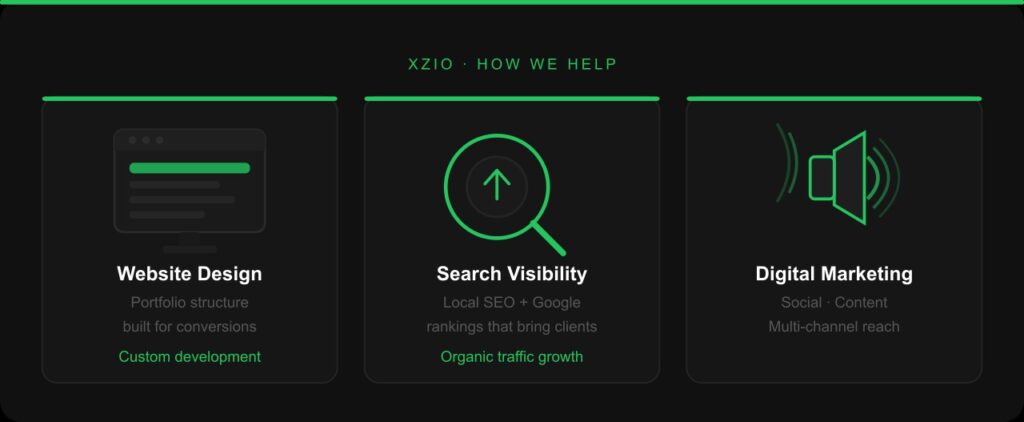
At Xzio, the focus is not just on building websites, but on improving how those websites perform in real situations.
Event planners often have strong services but struggle with how those services are presented online. The goal is to align the website with how visitors explore, compare, and decide.
This approach brings together design, visibility, and user flow to support consistent inquiries.
Custom Website Development and Portfolio Structuring
Through web design and development, websites are structured around how visitors interact with them.
Instead of placing content randomly, the focus is on building a flow that supports decision making.
For example:
- Portfolio sections are placed where visitors naturally look for proof
- Service pages are structured to match what clients are searching for
- Key sections are arranged to reduce confusion and keep users engaged
This helps visitors stay on the website longer and move toward contacting you.
Improving Search Visibility for Event Planning Services
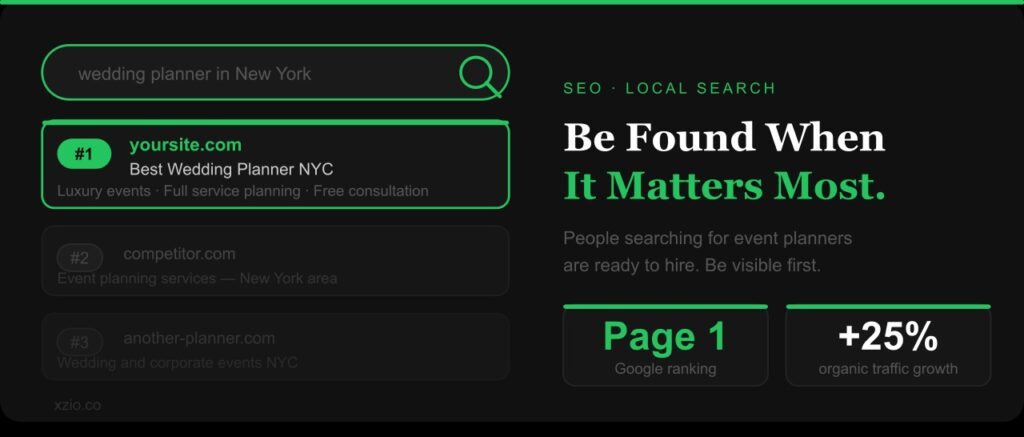
To bring consistent inquiries, your website needs to appear when people search for event planning services.
There are two main ways this happens. One focuses on broader searches, and the other focuses on location-based searches where most decisions take place.
Through search engine optimization, your website is aligned with the terms people use when they are exploring options or comparing planners.
For example:
- A user searching for “wedding planning services” visits different websites to understand offerings
- Someone planning an event searches for ideas or services and reviews multiple planners before deciding
At the same time, local SEO helps your business appear in searches where location matters.
For example:
- A couple searching for “wedding planner in Los Angeles” contacts businesses they see in local results
- A company searching for “event planner near me” reaches out to planners available in their area
When your website appears in both types of searches, it becomes easier to reach people who are already planning an event and looking for the right service.
Supporting Your Website with Ongoing Marketing
A website performs better when it is supported by consistent visibility.
Relying on one source of traffic is rarely enough. When your website is supported across different channels, it becomes easier to attract the right audience and stay visible over time.
With digital marketing, your business can reach people beyond direct searches and bring them back to your website.
For example:
- A user discovers your work through social media and visits your website to explore further
- Someone searching for event ideas comes across your content and learns about your services
- A visitor returns to your website after seeing your work multiple times across platforms
This repeated exposure helps people become familiar with your brand and increases the chances of inquiries.
Real Examples from Event Planning Websites
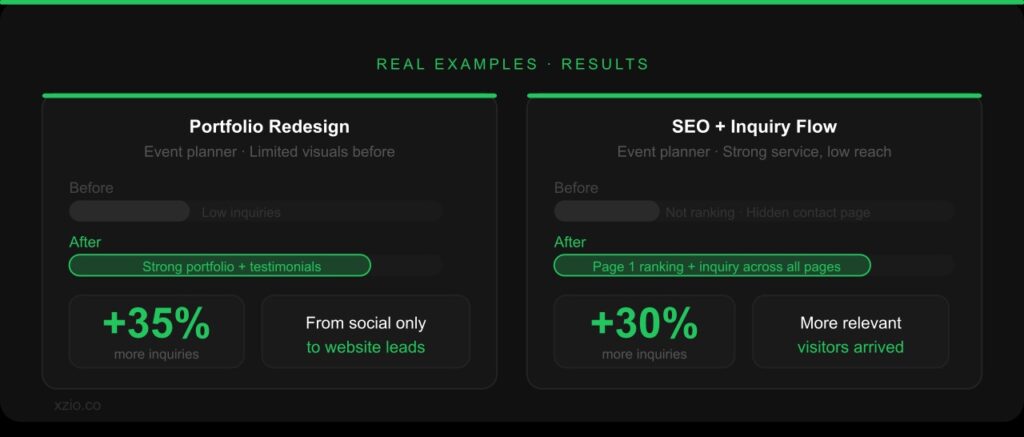
Small improvements in structure and visibility can change how a website performs. Below are two scenarios that show how these changes translate into better inquiries.
Portfolio Focused Website Redesign
An event planner had a website with limited visuals and no clear project structure. Visitors could see images, but they could not fully understand the type of events or the work involved.
After redesigning the website with a stronger focus on project presentation:
- Events were organized by category such as weddings and corporate events
- Each project included visuals along with context and execution details
- Client testimonials were added alongside key projects
- Inquiry options were placed within high-engagement sections
These changes helped visitors understand the work more clearly and explore the website with intent.
Over time, inquiries increased by around 25 to 35 percent, as more visitors began reaching out through the website instead of relying mainly on social platforms.
Search Visibility and Inquiry Flow Enhancement
Another planner had strong services but was not receiving enough inquiries through their website.
After improving visibility and restructuring the inquiry flow:
- The website was aligned with how people search for event planning services
- Content was updated to better explain services and event types
- Inquiry options were placed across key sections instead of a single contact page
As a result, the website began attracting more relevant visitors, and inquiries improved by approximately 20 to 30 percent over time.
Tips for Ongoing Inquiry Growth
Improving your website is one step. Keeping it effective over time depends on how consistently you update and maintain it.
To keep your website contributing to inquiries:
- Keep your portfolio updated so visitors can see your most recent work
- Stay visible where your audience spends time and guide them back to your website
- Collect client feedback and present it across relevant sections
- Review key pages regularly to ensure your services and contact options are clear
These actions help your website stay relevant and make it easier for new visitors to trust your work and reach out.
Turn Your Event Planning Website Into a Consistent Lead Channel
A website is more than just a digital presence. It is one of the main ways potential clients evaluate your business.
When your website presents your work clearly, builds confidence, and supports visibility, it becomes easier for visitors to take the next step.
By improving structure, visibility, and ongoing marketing, event planners can turn their website into a steady source of inquiries over time.
Xzio works with event planners to improve how their websites perform in real situations, focusing on better presentation, stronger visibility, and converting visitors into inquiries.
Ready to Improve Your Website
If your website is not bringing enough inquiries, it may need the right adjustments.
Schedule a website review with Xzio and explore how you can improve your inquiries.